


Views: 0 Author: Site Editor Publish Time: 2026-07-22 Origin: Site


TL;DR:
Engine motor mounts replacement is necessary when rubber-and-metal brackets securing the engine to the vehicle frame crack, harden, or collapse. Common warning signs include excessive vibration, clunking noises during gear shifts, and visible rubber deterioration. Replacing worn mounts restores ride comfort, protects drivetrain components, and prevents further damage.
Your car's engine produces a constant, powerful vibration. Left uncontrolled, that vibration would rattle every bolt, sensor, and component in the vehicle. Engine motor mounts are the components that stop that from happening—and when they fail, the consequences ripple through the entire drivetrain.
This guide covers everything you need to know: what motor mounts do, how to spot failure, what the replacement process looks like, and how to choose parts that will last.


Motor mounts serve two purposes simultaneously. First, they physically secure the engine (and in many front-wheel-drive vehicles, the transmission) to the vehicle's subframe or chassis. Second, the rubber core inside each mount absorbs vibration before it reaches the cabin.
Most passenger vehicles carry between two and four motor mounts, depending on the engine layout. Each one combines a metal bracket with a rubber or hydraulic damping core. The rubber is the part that wears out. Over time, heat cycles, oil exposure, and mechanical stress cause it to crack, harden, or collapse entirely—at which point the mount can no longer do either of its jobs effectively.
Failing motor mounts produce recognizable symptoms. The earlier you catch them, the less secondary damage you'll deal with.
Excessive cabin vibration is the most common complaint. A healthy mount dampens engine vibration so effectively that most drivers never feel it. When the rubber deteriorates, vibration transfers directly through the chassis and into the steering wheel, seats, and floor.
Clunking or banging sounds during acceleration, deceleration, or gear changes indicate that the engine is shifting position instead of staying firmly located. This movement stresses hoses, wiring, and exhaust components with every load change.
Engine movement visible under the hood is a clear red flag. If you can see the engine rocking significantly during a cold start or when shifting into drive, the mounts are not holding.
Unusual engine angle — if the engine appears tilted when viewed from above or below — means at least one mount has collapsed structurally, not just degraded.
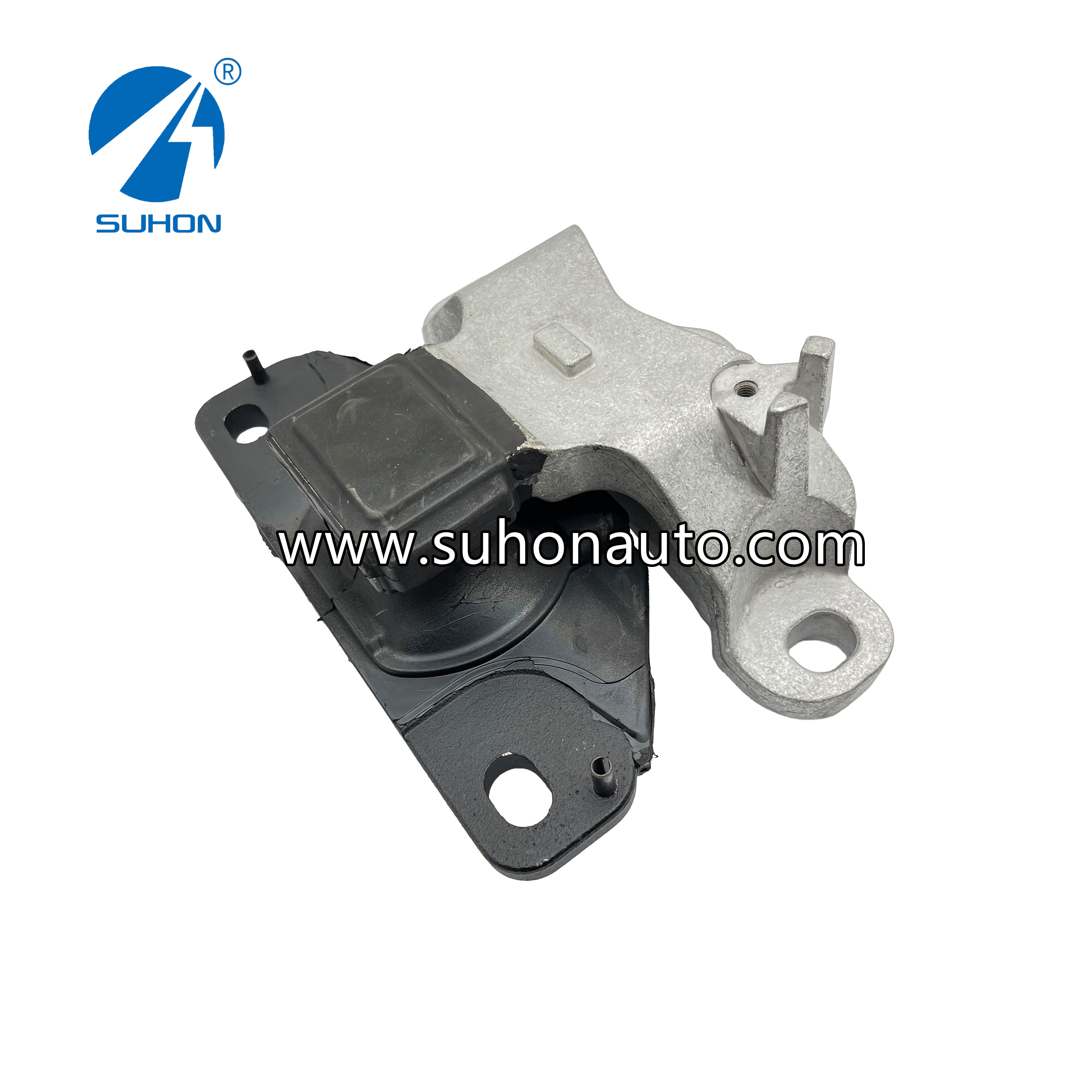

Engine motor mounts replacement is a moderately complex job. A mechanic with the right equipment can complete a standard replacement in two to four hours, though heavily corroded hardware or tight engine bays extend that timeline.
The general process:
Safely lift and support the vehicle
Support the engine from below using a floor jack and wooden block (to avoid damaging the oil pan)
Remove the fasteners connecting the mount to the subframe and engine bracket
Extract the failed mount
Install the new mount and torque all fasteners to specification
Lower the engine and verify alignment before completing reassembly
Replacing one mount while another is equally worn makes little sense. Inspect all mounts during the job—labor cost overlaps significantly when mounts are addressed together.
Choosing between mount types comes down to the vehicle's primary use and the driver's tolerance for NVH (noise, vibration, harshness).
Mount Type | Material | Vibration Damping | Durability | Best For |
|---|---|---|---|---|
Standard Rubber | Natural/synthetic rubber | Excellent | Moderate | Daily driving, comfort |
Hydraulic | Rubber + fluid chamber | Superior | Moderate-High | Luxury, premium vehicles |
Polyurethane | Synthetic polymer | Poor | High | Performance/track use |
OEM-Spec Rubber | Premium natural rubber | Excellent | High | OEM replacement standard |
For most drivers replacing worn mounts on a daily vehicle, OEM-specification rubber mounts deliver the best balance. They restore the factory ride quality and match the compliance characteristics the vehicle was engineered around.
Honda Civic owners replacing the front torque rod, for example, can source an OEM-spec part like the 50820-SNB-305 — a direct-fit mount for 2006–2011 Civic 1.8L models that meets original factory dimensions and fitment requirements.
A motor mount replacement only delivers lasting results if the replacement part matches or exceeds the original specification. Low-quality mounts use inferior rubber compounds that harden and crack faster than OEM parts — sometimes failing within 12 to 18 months under normal driving conditions.
Rubber quality is the critical variable. The best aftermarket manufacturers source their compounds from established raw material suppliers and maintain stable, tested formulas rather than cutting costs with inconsistent batches.
Kaiping Suhong Auto Parts Co., Ltd. — operating under the SUHON brand — has manufactured engine mounts and related suspension components since 1995. The company holds ISO9001 certification and produces its rubber components using Thailand RSS3 and Vietnam SVR3L natural rubber grades, both recognized for dimensional stability and fatigue resistance across a wide temperature range. For Mazda 3 and CX-30 owners needing a rear torque rod, the BDTV-39-070 is a precision-fit option covering 2018–2022 model years, built to the same OEM dimensional standards.
Suhon's product catalog spans Toyota, Honda, Nissan, Mazda, Ford, Subaru, Renault, Mercedes-Benz, and BMW applications — making it a practical sourcing option for multi-brand repair shops and individual owners alike. Products are available globally through the company's online product catalog, with direct inquiry support available via WhatsApp and email.
A worn motor mount rarely causes an immediate breakdown, which is precisely why so many drivers delay addressing it. The vibration becomes normal. The clunk becomes background noise. Meanwhile, the engine's unchecked movement is steadily fatiguing the hoses, wiring harness, and exhaust flex joints around it.
Catching motor mount wear early — and replacing with properly rated, OEM-specification parts — is consistently the lower-cost outcome. A failed mount addressed at 80,000 miles costs a fraction of the secondary repairs that accumulate if the problem runs to 100,000.
When sourcing replacement parts, prioritize verified fitment data, documented rubber compound quality, and a manufacturer with an established production track record. Those three criteria filter out most of the low-quality options before a single bolt is loosened.
Total cost varies by vehicle make, number of mounts replaced, and labor rates in your area. Parts for a single mount generally range from $30 to $200 depending on mount type and vehicle fitment. Labor runs between $150 and $400 per mount at a typical independent shop. Replacing multiple mounts during the same service reduces total labor cost significantly.
You can drive short distances, but doing so accelerates wear on surrounding components. Engine movement under load stresses coolant hoses, the exhaust manifold, and wiring connections. Driving with a fully collapsed mount risks contact between the engine and chassis or other components, which creates more expensive damage.
OEM-specification rubber mounts typically last 60,000 to 100,000 miles under normal driving conditions. Hydraulic mounts may require earlier replacement. Polyurethane mounts last longer mechanically but transmit significantly more vibration into the cabin. Exposure to engine oil leaks accelerates rubber degradation in any mount type.
High-torque front-wheel-drive vehicles place greater stress on torque axis mounts due to engine roll under acceleration. Honda Civic, Honda Accord, Mazda 3, and Toyota Camry models are frequently flagged for motor mount wear in the 80,000–120,000-mile range. Turbocharged engines generate more torque impulse and tend to wear mounts faster than naturally aspirated equivalents.
Cross-reference your vehicle's year, make, model, engine displacement, and drivetrain against the manufacturer's fitment data. OEM part numbers stamped on the original mount provide the most reliable cross-reference starting point. Reputable parts manufacturers publish verified application guides that match factory OE numbers to their replacement SKUs.


