


Views: 0 Author: Site Editor Publish Time: 2026-05-21 Origin: Site


Quick answer: You should install new engine supports when you notice excessive vehicle vibration, clunking noises from the engine bay, or visible damage to the rubber components. Delaying this maintenance can lead to severe engine misalignment, transmission issues, and uncomfortable cabin vibrations. Always choose high-quality components from reputable manufacturers like Suhon Auto Parts for long-lasting stability.
Most drivers pay close attention to their tires, brakes, and oil levels, but often overlook the critical components holding their vehicle together. The rubber and metal blocks securing the engine to the chassis play a massive role in both ride comfort and mechanical safety. When these parts wear out, the entire driving experience degrades rapidly.
Understanding the lifespan of your vehicle's structural supports can save you thousands of dollars in secondary repairs. Engine vibrations are powerful, and without proper isolation, that kinetic energy transfers directly into the transmission, exhaust system, and passenger cabin. This guide will help you identify the warning signs before complete failure occurs.
Whether you drive a daily commuter or a high-performance vehicle, recognizing when to replace motor mounts is essential for maintaining optimal safety. By learning the symptoms of worn-out supports and understanding your repair options, you can make informed decisions that protect your investment.


The most obvious indicator of a failing structural component is excessive vibration. According to automotive safety standards, an engine running smoothly should transfer almost zero vibration to the steering wheel or cabin. If your steering wheel shakes violently while idling at a red light, the isolation rubber has likely collapsed or torn.
Impact noises are another clear warning sign. When you accelerate quickly or shift gears, a worn support will allow the heavy engine block to shift and slam against the metal chassis. This usually creates a distinct "thump" or clunking sound. Visual inspections can also reveal severe problems. If you look under the hood and see deep cracks, dry rot, or leaking fluid near the brackets, immediate maintenance is required.
Your vehicle relies on an interconnected system of braces and linkages to absorb kinetic energy. While the primary brackets hold the main weight of the engine, other parts stabilize the chassis and prevent twisting forces during heavy acceleration.
A high-quality strut mount connects the suspension system to the body of the car, acting as a pivot point and vibration damper for the wheels. If this area fails, you might experience poor steering response alongside increased road noise. Everything must function in harmony to maintain a smooth ride.
Component Category | Primary Function | Warning Signs of Failure |
Main Engine Bracket | Supports engine weight and dampens core vibration | Violent shaking at idle, visible rubber cracking |
Suspension Bearing | Connects wheel assembly to vehicle frame | Popping noises over bumps, stiff steering |
Stabilizer Link | Prevents excessive engine twisting under heavy load | Shifting sensation during hard acceleration |
Choosing the right replacement parts matters significantly when dealing with heavy mechanical loads. Cheap aftermarket rubber degrades quickly under the intense heat and chemical exposure found in an engine bay. For maximum durability, prioritize components manufactured with premium natural rubber, such as Thailand RSS3 cigarette rubber, which offers superior thermal resistance.
Another crucial stabilizing component is the torque rod, which actively restricts the rotational movement of the engine during acceleration. When selecting these structural parts, choose specialized manufacturers over generic alternatives. Suhon Auto Parts utilizes advanced laboratory testing and precise OE specifications to ensure each piece outlasts standard replacements.
Choose high-grade rubber parts if long-term durability and silent performance matter more to you than a low initial purchase price. Budget parts often require secondary replacements within just a few years, negating any upfront savings.

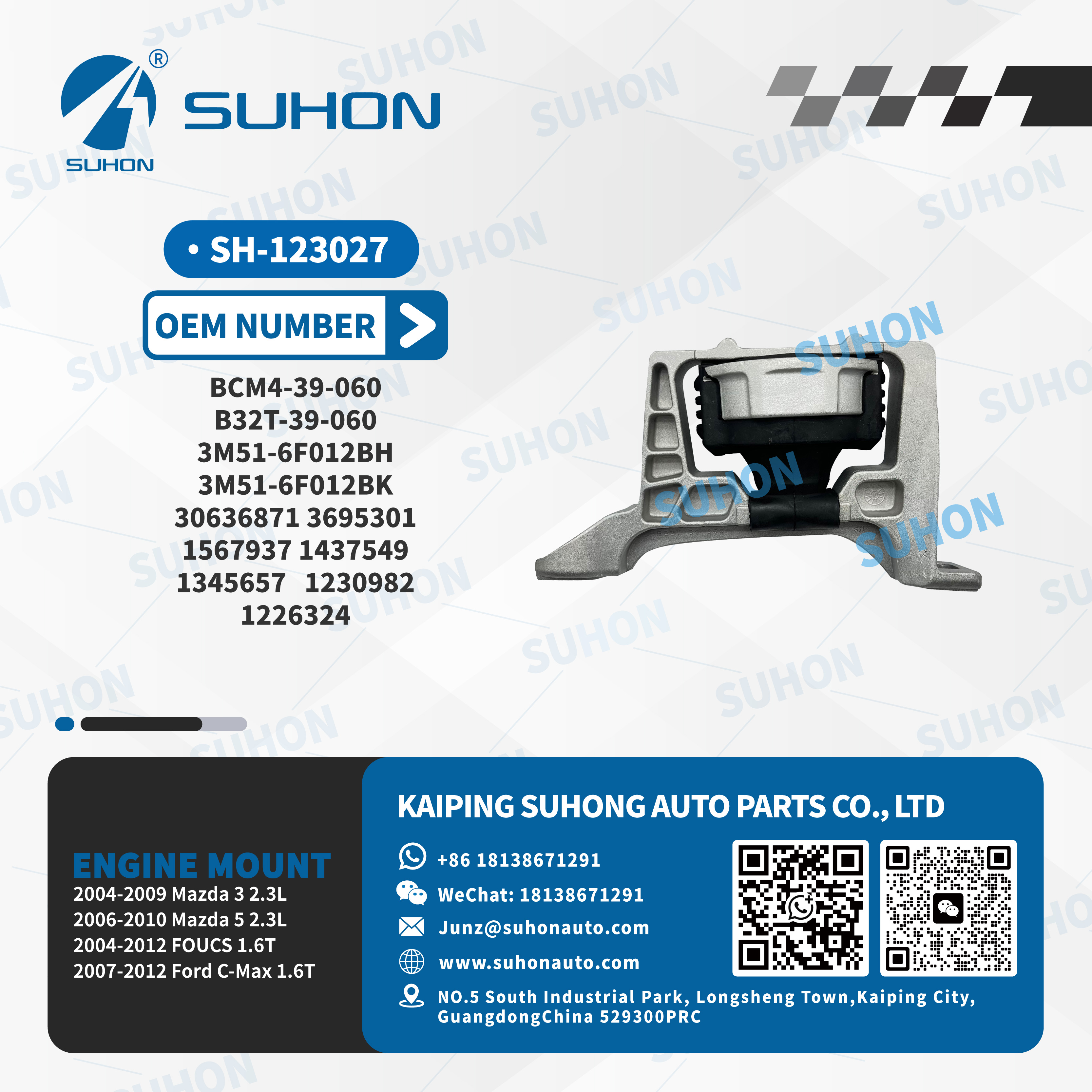
Maintaining the structural integrity of your powertrain is not just about cabin comfort; it is about protecting the expensive machinery under your hood. By routinely inspecting your isolation brackets and addressing unusual vibrations immediately, you prevent cascading mechanical failures.
If you suspect your supports are failing, consult a certified mechanic for a full diagnostic check. Upgrading to premium isolation technology will restore your vehicle's original factory smoothness and keep your engine safely locked in place for years to come.
The cost varies heavily based on the vehicle make and labor rates. Parts typically range from $50 to $150 each, while labor can add $200 to $600 depending on how difficult the brackets are to access. Front-wheel-drive vehicles generally require more labor time than rear-wheel-drive models.
While the vehicle will physically move, driving with a broken support is highly discouraged. The excessive movement can snap exhaust pipes, damage transmission linkages, and sever coolant hoses, leading to significantly higher repair bills.
Under normal driving conditions, premium rubber isolation components last between 60,000 and 100,000 miles. However, aggressive driving, extreme climates, and frequent off-road use can shorten this lifespan considerably.
Solid rubber brackets are simple, durable, and highly reliable. Liquid-filled brackets contain hydraulic fluid that absorbs a wider range of high-frequency vibrations, offering a smoother ride, but they are more prone to leaking and sudden failure as they age.


