
 English
Views: 0 Author: Site Editor Publish Time: 2026-08-19 Origin: Site
You just replaced your engine mounts. The car's back on the road. But something still feels slightly off—a faint vibration, a subtle clunk. Before you panic, there's a good chance nothing is wrong. New parts need time to adjust, and engine mounts are no exception.
This post explains what happens during the settling period after installation, how long it typically lasts, and what warning signs to watch for if something genuinely needs attention. If you're not sure what are motor mounts and how they function, we'll cover that too.
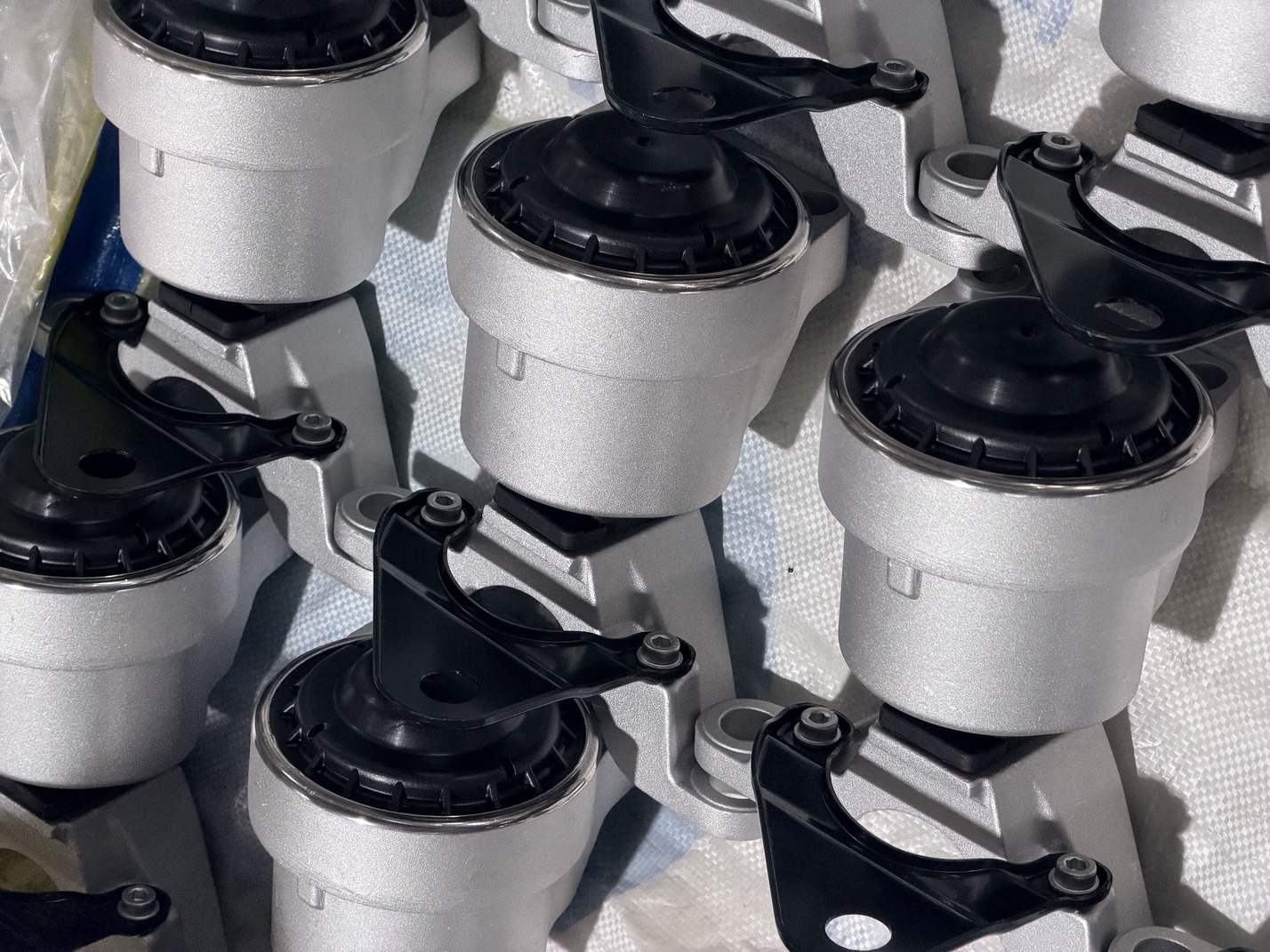
Motor mounts serve two critical purposes: they secure the engine to the vehicle's frame, and they absorb the vibration and torque the engine produces during operation. Without them, engine movement would transfer directly into the cabin—rattling the steering wheel, the dashboard, and everything in between.
Most motor mounts consist of a rubber or hydraulic core sandwiched between metal brackets. The rubber acts as a buffer, compressing and flexing with every engine cycle. Over time, that rubber degrades, which is when problems start.
High-quality mounts, like those manufactured by Kaiping Suhong Auto Parts Co., Ltd., use premium rubber compounds—sourced from Thailand RSS3 and Vietnam SVR3L—to ensure durability and consistent performance. With over 20 years of production experience and ISO9001 certification, Suhong produces engine mounts for Toyota, Honda, Nissan, Mazda, BMW, Mercedes-Benz, Subaru, Renault, and more. The material quality directly affects how quickly—and how smoothly—a new mount settles in.
So, do new engine mounts take time to settle? Yes—and understanding why helps set the right expectations.
Fresh rubber is stiffer than rubber that has been through thousands of heat and compression cycles. When you install a new mount, the rubber hasn't yet conformed to the load distribution of your specific engine. It needs to compress, flex, and find its natural resting position under real operating conditions.
For most vehicles, this break-in period lasts between 500 and 1,000 miles of normal driving. During that window, you might notice:
Slightly firmer vibration than expected
Minor clunking or thudding sounds at idle or during acceleration
A subtle sense that the engine "sits" differently
These sensations are normal. They typically fade as the mount compresses and settles under load. Driving in mixed conditions—city stop-and-go combined with highway cruising—helps accelerate the process by exposing the mount to a full range of engine speeds and torques.
The table below outlines what to expect at different stages after installation:
Stage | Mileage Range | Typical Feel |
|---|---|---|
Initial break-in | 0–200 miles | Stiff, possibly more vibration than old mount |
Mid-settling | 200–600 miles | Gradual smoothing, minor sounds may persist |
Fully settled | 600–1,000+ miles | Vibration reduced, handling feels normal |
Concern zone | Any stage with worsening symptoms | Inspect immediately |
If symptoms worsen rather than improve over the first few hundred miles, that's a different issue—and one worth investigating.
Not every vibration after installation is a settling issue. Some signs point to a defective part, an installation error, or a worn mount on a different axis. Recognizing the symptoms of bad motor mounts helps you tell the difference.
Watch for these red flags:
Excessive engine movement: If you can visibly see the engine rocking during acceleration or braking, the mount isn't holding properly.
Persistent loud clunking: A settling mount produces occasional, softening sounds. A failing mount produces loud, repetitive impact noise.
Vibration that worsens at specific RPMs: This often indicates the mount is no longer damping resonance at certain engine speeds.
Misalignment of drivetrain components: A mount that collapses or shifts can pull belts and hoses out of alignment, creating secondary issues.
These symptoms differ from normal break-in behavior in one key way—they don't improve. If you're three or four weeks post-installation and the feel has gotten worse rather than better, the mount itself may be at fault. That's when sourcing a replacement from a reliable manufacturer matters.
Not all engine mounts behave the same way during break-in. A mount made from low-grade rubber may feel acceptable initially but degrade rapidly. Conversely, a mount engineered with a stable rubber formula and consistent vulcanization will settle more predictably and last significantly longer.
Kaiping Suhong Auto Parts Co., Ltd. operates a professional rubber laboratory and applies advanced production equipment to maintain tight quality control across every mount it produces. The SUHON and DIDN brands have earned recognition from customers across domestic and international markets precisely because the formulation is consistent—and consistency directly affects how a mount performs in those critical first 1,000 miles.
This matters for buyers who source replacement parts in volume. An inconsistent mount introduces unpredictability into the break-in period, which means more returns, more complaints, and more callbacks. A reliable supplier eliminates that variable.
A few simple practices help new mounts settle properly and extend their service life:
Avoid heavy loads immediately after installation. Give the mount at least 100–200 miles of normal driving before towing or carrying significant cargo.
Check torque specs after the first 500 miles. Bolts can sometimes loosen slightly as the rubber compresses and repositions.
Inspect the surrounding components. A bad mount often masks worn transmission mounts or subframe bushings. Replacing just one mount and leaving degraded neighbors can skew the settling process.
Use the correct part for your vehicle. Cross-referencing OEM numbers—like those listed in Suhong's product catalog—ensures you're installing a mount designed for your engine's weight, vibration profile, and mounting geometry.
New engine mounts do take time to settle—typically between 500 and 1,000 miles under normal driving conditions. During that period, some additional vibration or minor sound is expected and will resolve on its own. If it doesn't, that's your signal to inspect further.
Choosing a high-quality replacement part from the outset reduces the uncertainty in that break-in window. Suhong's engine mounts are engineered for consistent material performance across a wide range of vehicle models, covering Toyota, Honda, Nissan, Mazda, Ford, Subaru, Renault, BMW, and Mercedes-Benz applications. Browse the full product range at suhonauto.com or contact the team directly at kathy@suhonauto.com to discuss your sourcing needs.


