
 English
Views: 0 Author: Site Editor Publish Time: 2026-08-12 Origin: Site
TL;DR:
Motor mounts secure your engine to the vehicle frame and absorb vibration. When they wear out, you'll notice excessive shaking, clunking sounds, and engine movement. Recognizing these warning signs early—and choosing a quality replacement part—prevents costly drivetrain damage and keeps your vehicle running smoothly.
Your engine doesn't just sit there on its own. It's held in place by motor mounts—small but critical components made of rubber and metal that absorb vibration, dampen noise, and keep the engine properly aligned with the drivetrain. Most drivers never think about them until something goes wrong.
The problem? When motor mounts fail, the consequences escalate fast. What starts as a mild vibration can turn into misaligned hoses, damaged exhaust components, and stress on surrounding parts. Catching the warning signs early is the difference between a straightforward repair and an expensive chain of fixes.
This guide covers what motor mounts do, how to spot failure before it gets serious, what the replacement process involves, and how to choose the right part for your vehicle.

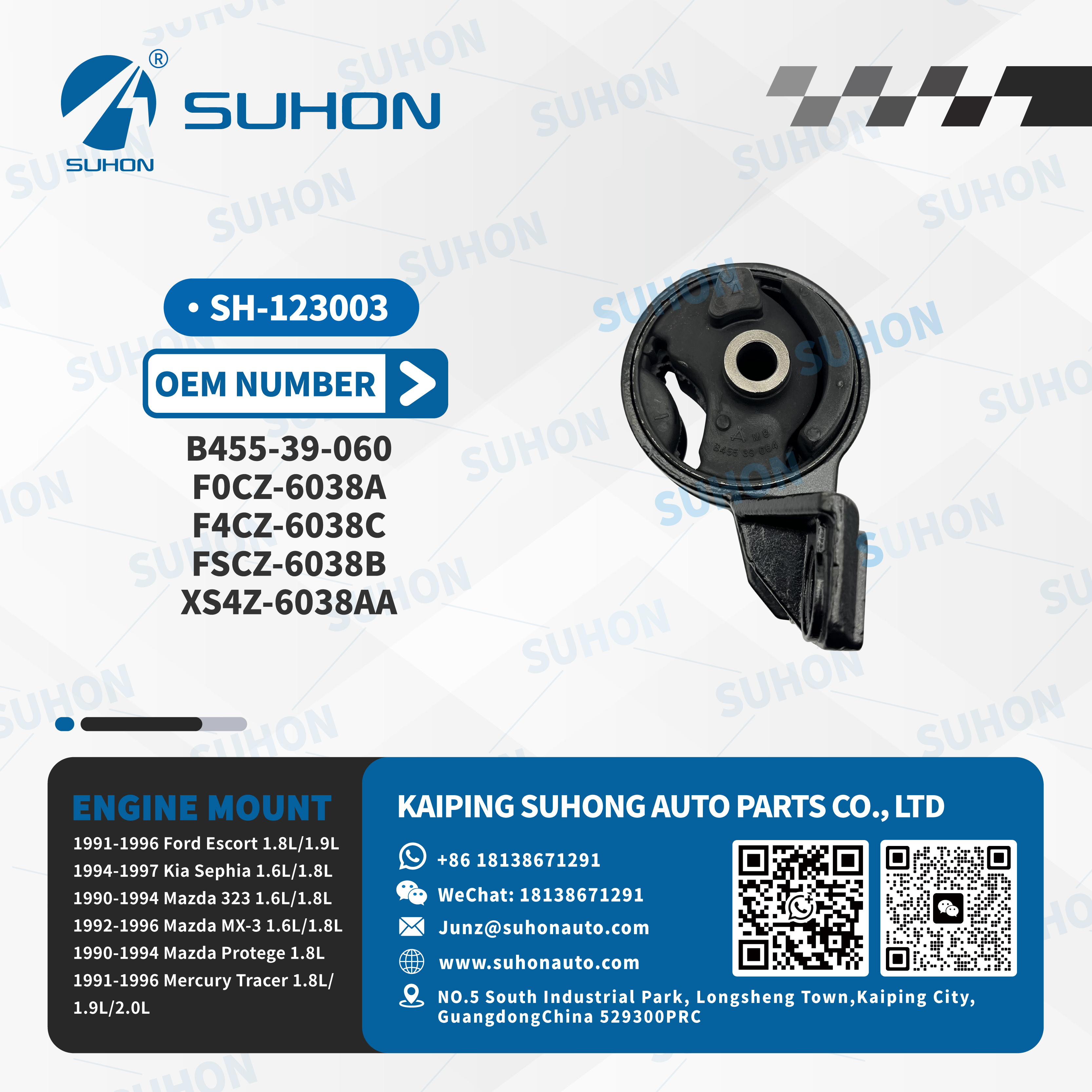
Motor mounts perform three jobs simultaneously. They hold the engine in a fixed position relative to the chassis. They isolate engine vibration so it doesn't transfer into the cabin. And they keep the engine from shifting excessively during acceleration, braking, and cornering.
Most vehicles have two to four mounts, depending on the engine layout and drivetrain configuration. Front-wheel-drive vehicles commonly use a torque strut or dog bone mount in addition to standard side mounts. Each mount carries a portion of the engine's weight and absorbs different directional forces.
The rubber core of each mount is the key component. Over time, heat cycles, oil contamination, and mechanical stress cause that rubber to harden, crack, or separate from its metal housing. Once the rubber degrades, the mount can no longer do its job.
Early detection matters. The symptoms of bad motor mounts often start subtle—easy to dismiss as normal road noise or minor roughness—before becoming unmistakable.
Symptom | What It Feels or Sounds Like | Severity Level |
|---|---|---|
Excessive vibration | Strong shaking felt in the cabin at idle or low speed | Moderate |
Clunking or banging | Loud impact noise during acceleration or gear changes | High |
Engine movement | Visible engine rocking when revving in park | High |
Rough idle | Cabin vibration at stoplights that disappears at speed | Moderate |
Misaligned components | Hoses or belts showing unusual wear or tension | High |
Increased road noise | More cabin noise than usual, especially over bumps | Low to Moderate |
Any one of these symptoms warrants a closer look. Two or more appearing together is a strong signal that at least one mount has failed.
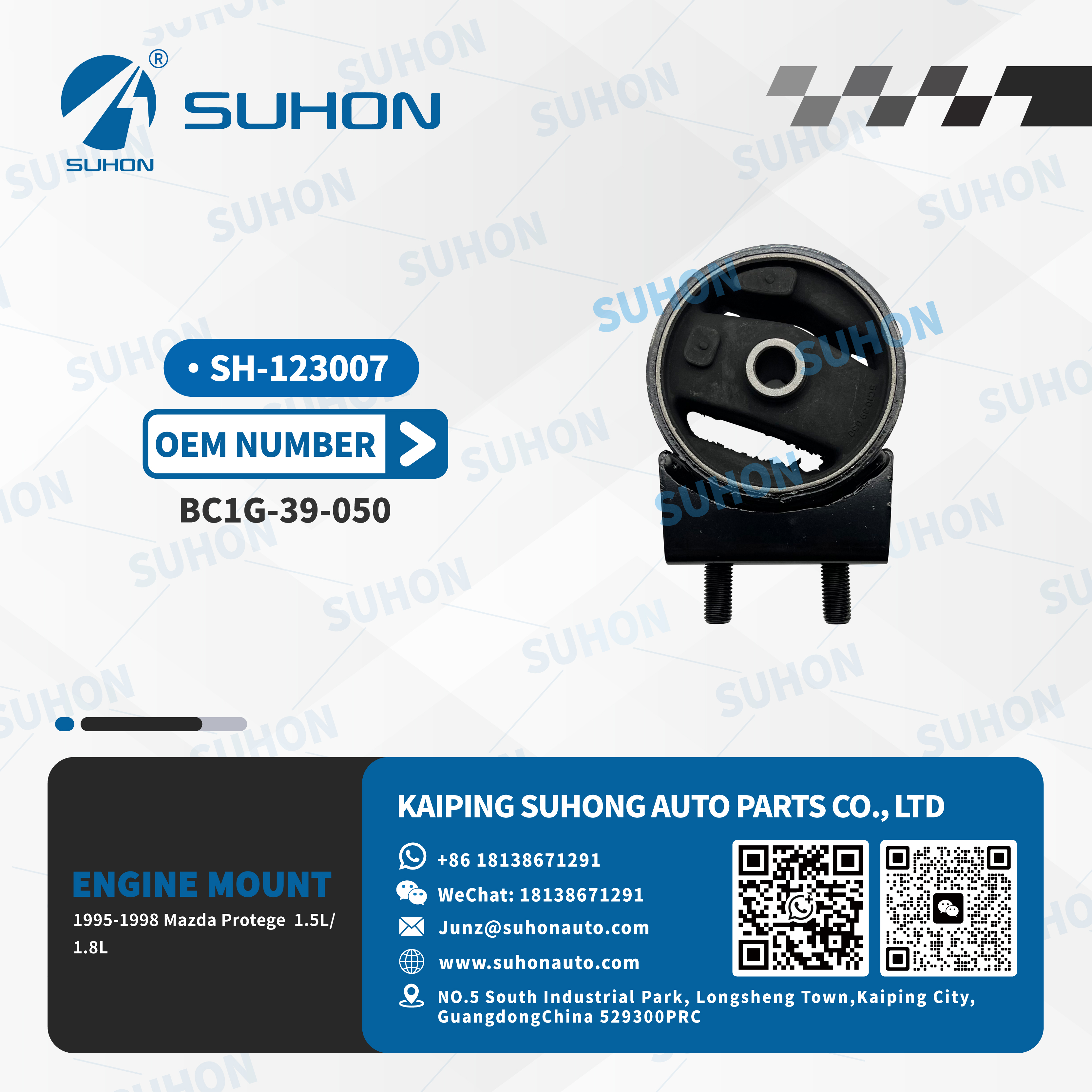
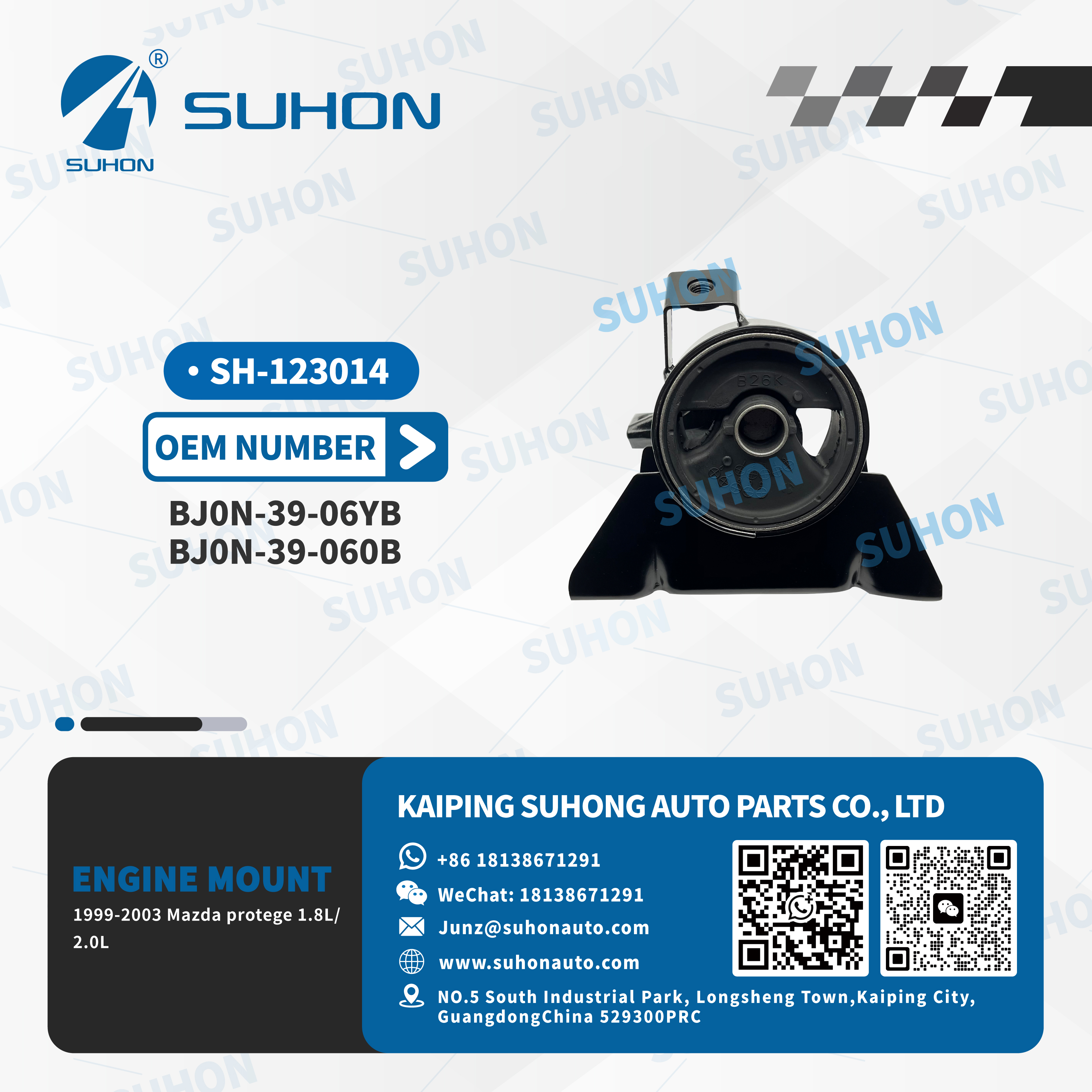
Rubber is resilient, but not indestructible. The symptoms of worn motor mounts trace back to a few common causes: age and heat exposure, oil leaks that saturate the rubber, hard driving habits that put extra stress on mounts, or simply high mileage wear. Vehicles driven in stop-and-go traffic or with frequent hard acceleration tend to experience mount wear sooner than those driven at steady highway speeds.
Hydraulic mounts—used on many modern vehicles to provide enhanced vibration isolation—can also develop internal fluid leaks. When the fluid escapes, the mount collapses and loses its damping ability entirely, often causing a sudden and dramatic increase in cabin vibration.
Engine motor mounts replacement is a job that ranges from straightforward to moderately complex depending on the vehicle and which mount has failed. Here's a general overview of what the process entails:
Step 1 — Lift and secure the vehicle. The vehicle is raised and supported safely on jack stands. Some mount positions require removing a wheel or wheel well liner to access the mount from the side.
Step 2 — Support the engine. Before unbolting any mount, a floor jack with a wooden block (or an engine support bar across the engine bay) is used to take the engine's weight. This step is non-negotiable—removing a mount without supporting the engine can allow it to drop suddenly.
Step 3 — Remove the failed mount. The mounting bolts are unthreaded from both the engine bracket and the chassis. On vehicles with tight engine bays, this can require extensions and universal joints to reach the fasteners.
Step 4 — Install the replacement mount. The new mount is positioned and bolted in place, the engine support is slowly released, and the mount bolts are torqued to the manufacturer's specification.
Step 5 — Verify the repair. With the vehicle lowered, the engine is started and revved to confirm the vibration and noise have been resolved. All removed components are reinstalled and inspected.
A skilled mechanic typically completes a single mount replacement in one to three hours. Replacing multiple mounts adds time, but doing them together during one service visit is more cost-efficient than spreading the work across separate appointments.
Not all motor mounts are equal. Choosing a substandard part may solve the immediate symptom while setting up the same failure again within a year or two. A quality mount should meet OEM specifications for durometer (rubber hardness), load capacity, and dimensional accuracy.
Kaiping Suhong Auto Parts Co., Ltd. — operating under the SUHON and DIDN brands — has specialized in engine mount manufacturing since 1995. Based in Guangdong Province, China, the company holds ISO 9001 certification and produces engine mounts using Thailand RSS3 and Vietnam SVR3L rubber, processed in a dedicated rubber laboratory with stable, tested formulas. Their product range covers Toyota, Honda, Nissan, Mazda, Ford, Subaru, Renault, Mercedes-Benz, and BMW applications — making it straightforward to find an OEM-spec replacement regardless of vehicle make.
For workshops and procurement teams sourcing high-volume replacement parts, Suhong's broad catalog and documented quality standards reduce the risk of comebacks and warranty claims. You can browse their full engine mount range at suhonauto.com.
A mechanic may recommend proactive mount inspection during any major service that involves dropping or supporting the engine — a timing belt or chain service, for example, or a clutch replacement. Mounts are visible at that point and replacement adds relatively little labor cost when the engine is already partially disassembled.
As a general guideline, vehicles with more than 100,000 miles should have their mounts inspected annually, particularly if the vehicle is used for towing or frequent hard driving.
Motor mounts are small, quiet components until they stop working. At that point, they announce their failure through vibration, noise, and movement that's hard to ignore. The repair itself is manageable — the key is choosing a replacement part built to last.
Suhong Auto Parts manufactures engine mounts that meet the dimensional and material standards your vehicle was designed around. If you're sourcing mounts for a repair shop, fleet, or individual vehicle, contact Suhong at kathy@suhonauto.com or visit suhonauto.com to request product specifications and pricing.
How do I know if my motor mounts are bad?
The most common indicators are excessive cabin vibration at idle, a clunking or banging sound during acceleration or deceleration, visible engine movement when revving in park, and unusual wear on belts or hoses near the engine. If two or more of these appear together, have the mounts inspected promptly.
Can I drive with a bad motor mount?
Short distances are possible, but driving on a failed mount is not advisable. A collapsed mount allows the engine to shift position under load, which can damage surrounding components including the exhaust system, CV axles, and cooling hoses. The problem does not resolve itself and typically worsens with continued use.
How long do motor mounts last?
Most motor mounts last between 60,000 and 100,000 miles under normal driving conditions. Aggressive driving, oil leaks near the mounts, and high-heat environments shorten that lifespan considerably.
Is it worth replacing all motor mounts at once?
If one mount has failed, the others on a high-mileage vehicle have experienced the same age and stress. Replacing all mounts in a single service visit costs more upfront but reduces total labor expense compared to individual replacements over time.
What's the difference between OEM and aftermarket motor mounts?
OEM mounts are manufactured to the vehicle maker's exact specifications. Quality aftermarket mounts — such as those produced by Kaiping Suhong Auto Parts Co., Ltd. to ISO 9001 standards — match OEM specifications in rubber formulation, load rating, and dimensional accuracy, often at a more competitive price.


