
 English
Views: 0 Author: Site Editor Publish Time: 2026-07-02 Origin: Site
TL;DR:
A proper motor mount inspection involves checking for visible rubber cracks, excess vibration, clunking noises, and engine movement under load. Mounts typically need replacement every 60,000–100,000 miles. Catching wear early on vehicles like the Toyota Camry, Honda Accord, or Mazda CX-5 prevents costly drivetrain damage and restores ride comfort.
Every car relies on a small but critical set of components to keep the engine secured to the chassis. These components—engine mounts—do far more than hold the motor in place. They absorb vibration, dampen torque forces, and protect surrounding components from the stress of constant combustion cycles. When they wear out, the consequences range from annoying rattles to serious mechanical damage.
This guide walks through everything you need to know: how to spot a failing mount, how to inspect one properly, and when it's time to order a replacement. For shop owners, fleet managers, and hands-on vehicle owners, understanding this process can save significant time and money.
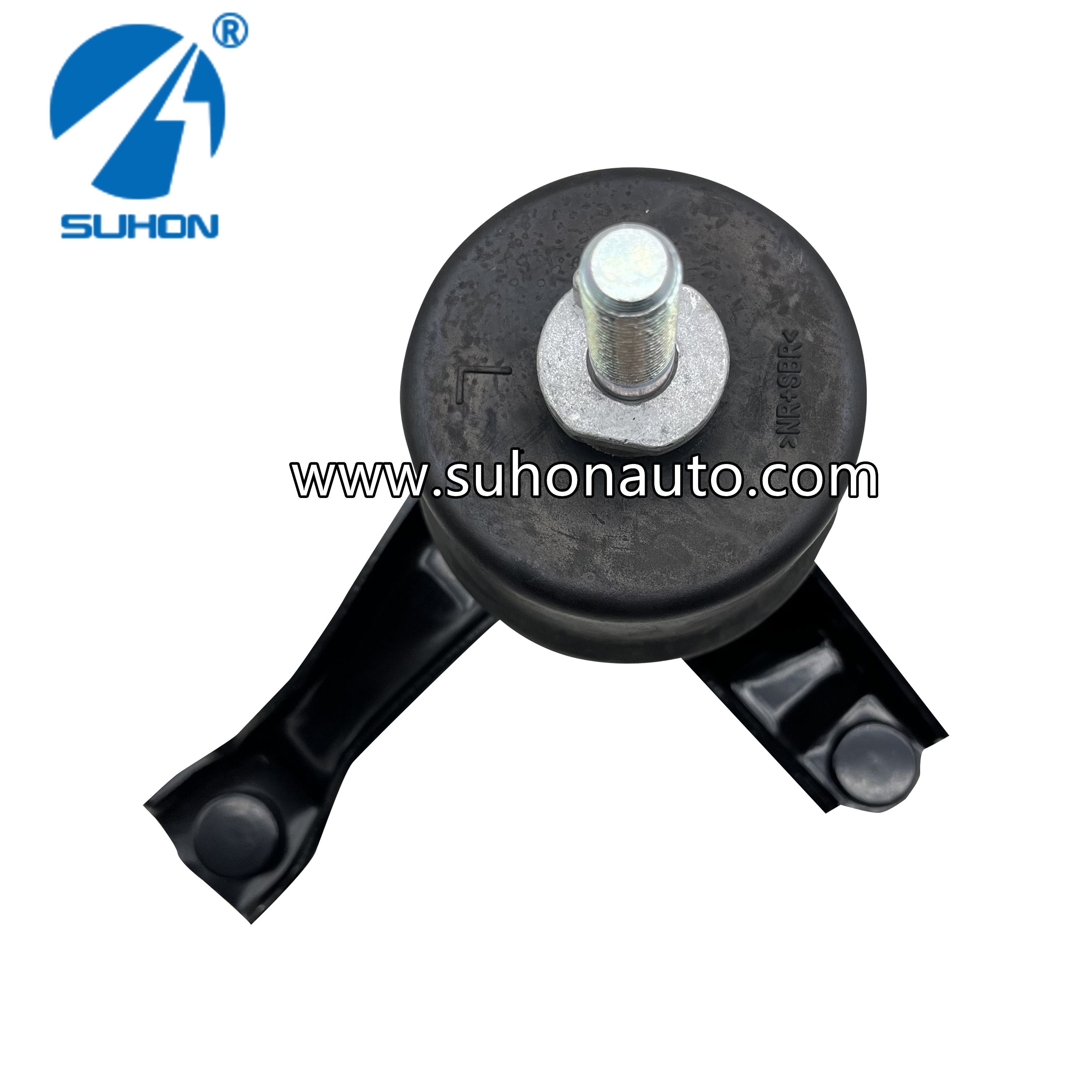
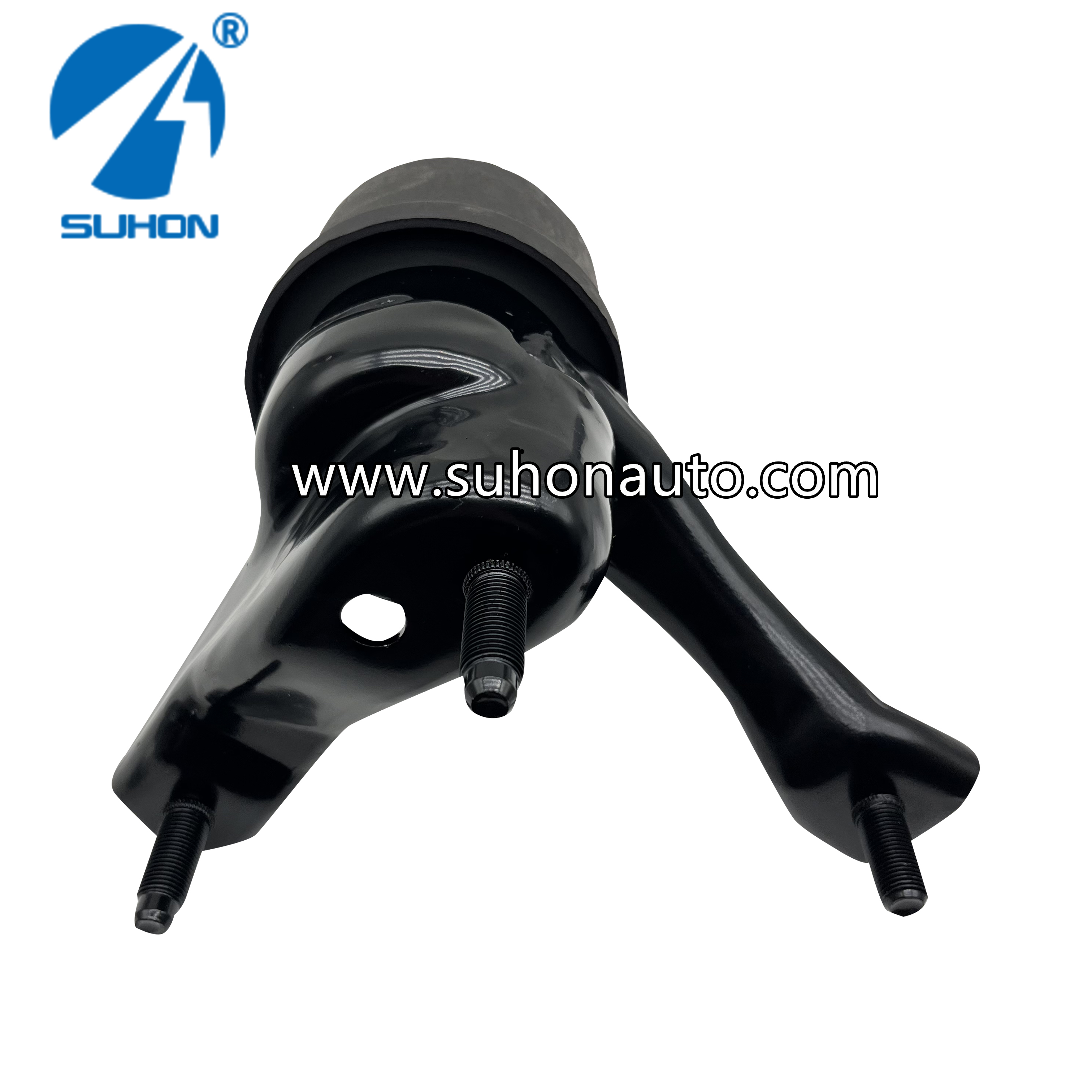
An engine mount connects the engine block to the vehicle's subframe or chassis. Most cars use two to four mounts depending on the drivetrain layout. Each mount consists of a metal bracket bonded to a rubber bushing. The rubber absorbs engine vibration and prevents it from transferring into the cabin.
On front-wheel-drive vehicles—like the Mazda 2 DE with a 1.3L/1.5L engine or the Honda Civic with a 1.5L turbocharged unit—the engine mounting car configuration typically includes a torque strut or dog bone mount to control forward and rearward engine movement during acceleration. Rear-wheel-drive and AWD platforms use a different arrangement, but the fundamental function remains the same.
Rubber degrades over time. Heat cycling, oil contamination, and constant mechanical stress cause the bushing material to crack, harden, or separate entirely from the metal bracket. Once that happens, the mount can no longer do its job.
Recognizing the symptoms early makes motor mount inspection straightforward, even without specialized tools. Here are the most common indicators:
Excessive vibration at idle: A healthy mount absorbs most engine vibration. When the rubber deteriorates, vibration transfers directly into the floor, steering wheel, and seats.
Clunking or thudding noises: A loud clunk when shifting from park to drive, or during hard acceleration, often points to a mount that has fully separated.
Visible engine movement: Ask someone to rev the engine while you watch from the engine bay. More than a few millimeters of movement indicates mount failure.
Increased cabin noise: Road noise and engine noise become more pronounced as mounts lose their dampening properties.
Misaligned drivetrain components: Severely worn mounts can cause the engine to shift position, putting stress on CV axles, transmission lines, and exhaust connections.
These symptoms appear gradually. A Toyota Corolla with OE part number 12372-0H110 may show early vibration months before the mount fully fails. Catching it at that stage—rather than after complete separation—keeps the repair simple and affordable.
With the engine off and cooled, examine each mount from the top of the engine bay and from underneath the vehicle. Look for:
Cracks or tears in the rubber bushing
Separation between the rubber and the metal bracket
Oil soaking (oil accelerates rubber degradation significantly)
Excessive rust on the metal components
On the Mazda CX-3 DK 2.0L with SH-123092 (OE: D10G-39-06Y / DH3V-39-06Y), the front and rear mounts are accessible from below with the vehicle on a lift. Take your time here—small cracks in the rubber are easy to miss under poor lighting.
Start the engine and place the transmission in drive while keeping your foot firmly on the brake. Have an assistant observe the engine movement from outside. Repeat in reverse. Under load, the engine should move no more than 1–2mm. Larger movement confirms a compromised mount.
With the engine off, use a pry bar to gently load each mount. Place the bar between the mount bracket and the subframe and apply light pressure. Excessive deflection—or any visible gap in the rubber—means the mount has lost structural integrity and requires attention.
Inspection Method | What It Reveals | Tools Required |
|---|---|---|
Visual check | Cracks, oil saturation, rust | Flashlight, mirror |
Load test (in gear) | Excessive engine movement | Assistant, safe working space |
Pry bar test | Rubber deflection, separation | Pry bar |
Vibration assessment | Dampening loss | None (feel-based) |
Noise evaluation | Clunking under torque | None (listen-based) |
Most OEM-quality mounts last between 60,000 and 100,000 miles under normal driving conditions. Several factors accelerate wear:
Aggressive driving: Hard launches and frequent towing stress mounts far more than typical commuting.
Oil leaks: Engine oil softens and degrades rubber compounds quickly. A leaking valve cover gasket sitting above a mount will shorten its service life considerably.
Low-quality replacement parts: Mounts made from inferior rubber compounds harden and crack faster. Kaiping Suhong Auto Parts Co., Ltd.—operating under the Suhon brand—manufactures engine mounts using Thailand RSS3 natural rubber and Vietnam SVR3L compound, both of which offer superior elasticity and heat resistance compared to synthetic alternatives. This material consistency is one reason the Suhon product line holds ISO 9001 certification.
Replacement becomes necessary when inspection reveals any of the following:
Complete rubber separation from the metal bracket
A visible void or gap where the rubber has torn through
The engine shifts audibly or visibly during gear changes
Vibration has become noticeable at highway speeds, not just at idle
For vehicles like the 2007–2013 Mazda 2 DE (1.3L/1.5L/MT) or the 2014–2019 Mazda 2 DJ/DL (1.3L/1.5L), the Suhon SH-123077 and SH-123087 mounts—cross-referenced with DEA No. A4456, Anchor No. 10135, and Westar No. 7449—are direct OEM-equivalent replacements. Using a part that matches the original specifications ensures correct load ratings and fitment.
Choosing the right mount matters. For Toyota Yaris 1.5L (2016–2018) and Scion iA 1.5L (2016), the same SH-123087 mount (OE: DA6V-39-040 / 12371-WB001) covers both platforms due to shared architecture. This cross-compatibility simplifies inventory for repair shops servicing mixed vehicle lines.
When scheduling engine motor mounts replacement for Toyota, Honda, Mazda, and Ford platforms, always replace in pairs where possible—particularly the left and right mounts on transversely mounted engines—to maintain balanced load distribution.
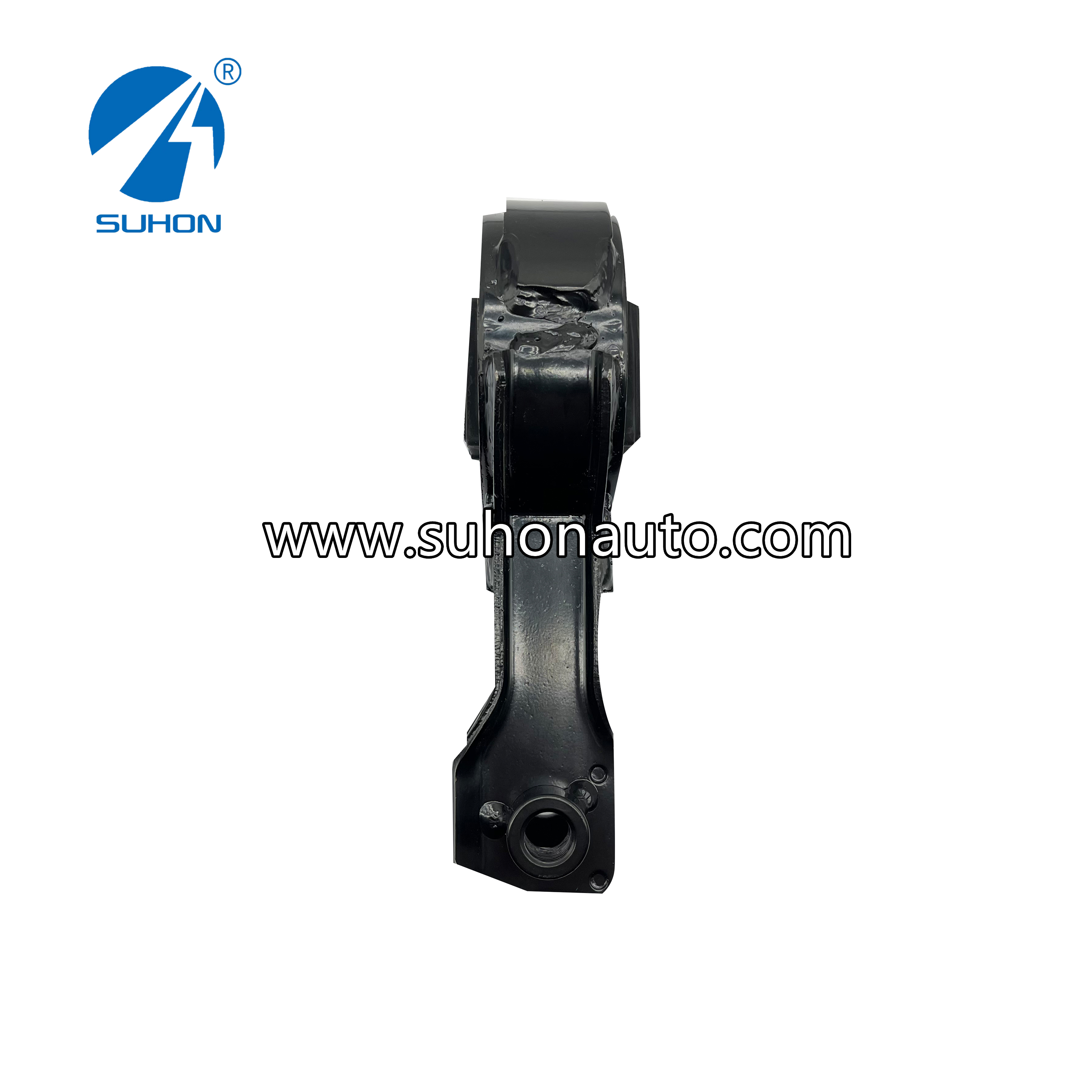
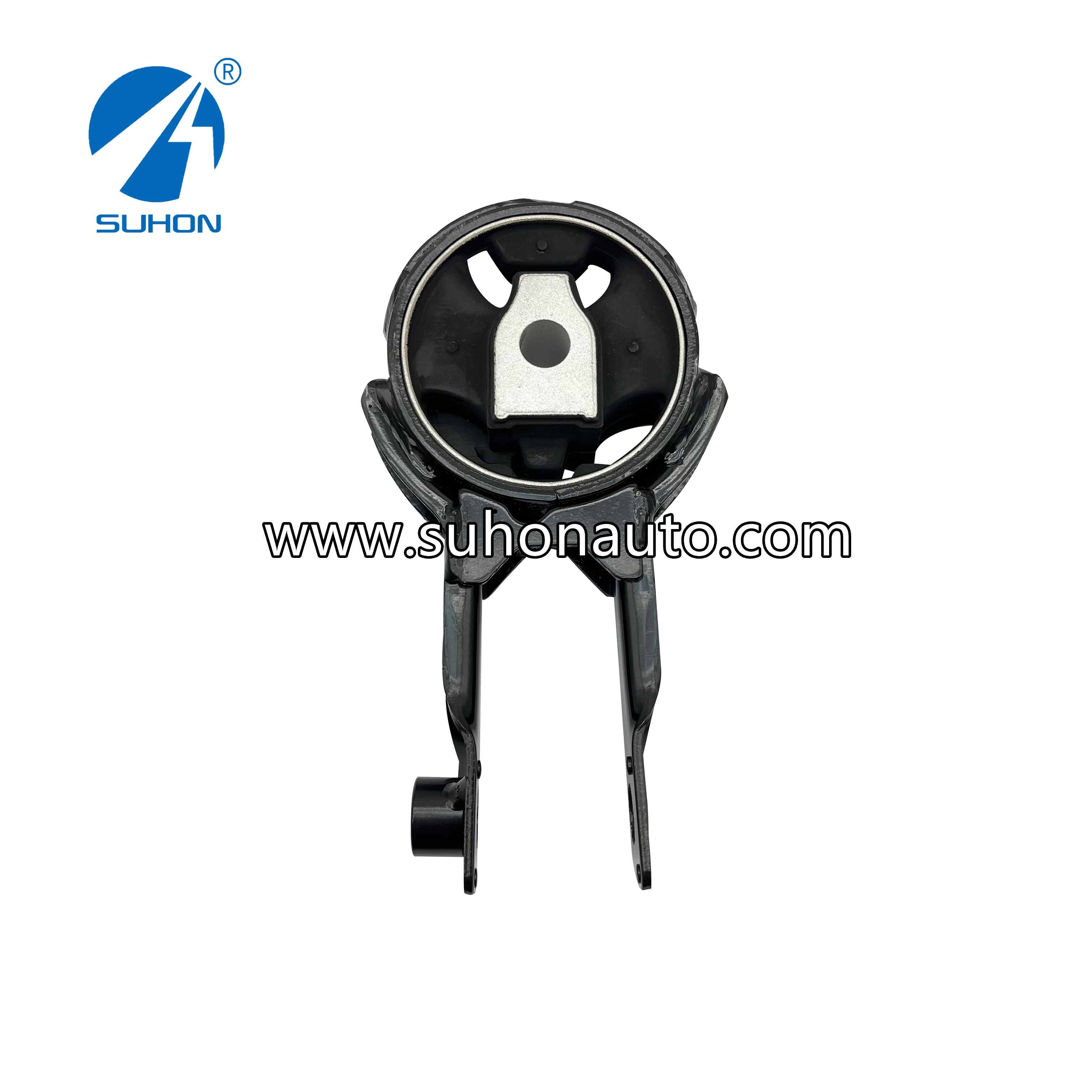
Kaiping Suhong Auto Parts Co., Ltd. has manufactured engine mounts since 1995 from its facility in Kaiping City, Guangdong Province. The company covers a broad range of makes including Toyota, Honda, Nissan, Mazda, Ford, Subaru, Renault, Mercedes-Benz, and BMW.
Their engine mounting car parts catalog for Mazda CX-3, CX-5, and Mazda 2 includes mounts with full OE cross-referencing, making it straightforward to confirm fitment before ordering. For wholesale buyers and repair shops, the Suhon team can be reached at junz@suhonauto.com.
A failed engine mount rarely announces itself dramatically. The process is gradual—a little more vibration, a subtle thud on acceleration, then a more significant shift that strains adjacent components. Regular inspection, ideally at every oil change or 15,000-mile service interval, keeps this from becoming a costly surprise.
When a mount does need replacing, the quality of the replacement part determines how long the next service interval will be. OEM-specification rubber compounds, precise bracket geometry, and verified cross-referencing to original equipment numbers are non-negotiable factors. Suhon's product range is built around exactly those standards.
A motor mount inspection is recommended every 15,000 miles or at each annual service. High-mileage vehicles, those used for towing, or any car showing vibration or clunking symptoms should be inspected immediately, regardless of mileage.
Driving with a significantly worn or broken mount is not recommended. A failed mount allows the engine to shift under load, which can damage CV axles, exhaust connections, coolant lines, and transmission linkages. Short-distance driving may be unavoidable, but prompt replacement prevents cascading damage.
A motor mount secures the engine to the chassis. A transmission mount does the same for the gearbox. They work together to control powertrain movement. Both should be inspected simultaneously, as failure of one increases stress on the other.
Quality varies significantly across aftermarket brands. Mounts manufactured from natural rubber compounds—such as Thailand RSS3 used by Suhon—offer durability comparable to OEM specifications. Low-cost mounts using synthetic rubber blends tend to harden and crack faster, particularly in high-heat engine bays.
Cross-reference your vehicle's year, make, model, and engine displacement with an OE parts catalog or a supplier's fitment guide. For example, a 2015–2019 Mazda CX-3 DK 2.0L uses OE number D10G-39-06Y, which corresponds to Suhon part SH-123092 and DEA No. A4459. Always verify fitment before ordering.


