


Views: 0 Author: Site Editor Publish Time: 2026-09-25 Origin: Site


A clunk when you shift into drive. A shudder that rattles the steering wheel at idle. A vibration that seems to travel straight from the engine bay into the cabin. These are the symptoms that send most drivers searching for answers, and the first question that usually follows is simple: how much is this going to cost me?
The truth is, there's no single number that applies to every car. The cost of engine mount replacement swings widely depending on the vehicle, the number of mounts affected, and whether you're paying a shop or doing the work yourself. Understanding what drives that price can help you budget accurately and avoid paying more than necessary.
This post breaks down the real factors behind engine mount pricing, what you can expect to pay in different scenarios, and how to tell whether a repair is actually worth the investment.
Engine mounts are rubber-and-metal components that anchor the engine to the vehicle's chassis. They do two jobs at once: they hold a heavy, constantly moving engine firmly in place, and they absorb vibration so it doesn't transfer into the cabin. Most vehicles use between two and four mounts, depending on the layout of the engine and transmission.
Over time, the rubber inside these mounts hardens, cracks, or separates from the metal housing. Heat, oil exposure, and age all accelerate this process. Once a mount fails, the engine shifts more than it should during acceleration or braking, which is exactly when drivers start noticing clunks, vibrations, or a rough idle.
Ignoring a failing mount rarely saves money in the long run. A loose engine can stress nearby components, including belts, hoses, and exhaust connections, turning a moderate repair into a larger one.
Several factors combine to determine what you'll actually pay:
Vehicle make and model. Luxury and European vehicles typically carry higher parts costs than mainstream Japanese or American models. A mount for a BMW or Mercedes-Benz can run noticeably more than the equivalent part for a Honda or Toyota.
Number of mounts needed. Many shops recommend replacing all mounts on an engine at the same time, even if only one has failed. This is because the remaining mounts have usually endured the same wear and will likely need replacement soon anyway. Replacing them together saves on labor in the long run, even though it raises the upfront bill.
Labor and accessibility. Some mounts sit in easy-to-reach spots. Others require lifting the engine with a jack or hoist to access, which adds significant labor time. This is often the single biggest swing factor in total price.
OEM versus aftermarket parts. Original equipment manufacturer (OEM) parts generally cost more than quality aftermarket alternatives, though well-made aftermarket mounts, including those built to OE-standard specifications, can offer comparable durability at a lower price.
Bushing-specific repairs. In some cases, only the rubber bushing inside the mount has degraded rather than the entire mount assembly. An engine mount bushing replacement cost is typically lower than a full mount replacement, but it's only an option on certain designs where the bushing can be serviced independently.
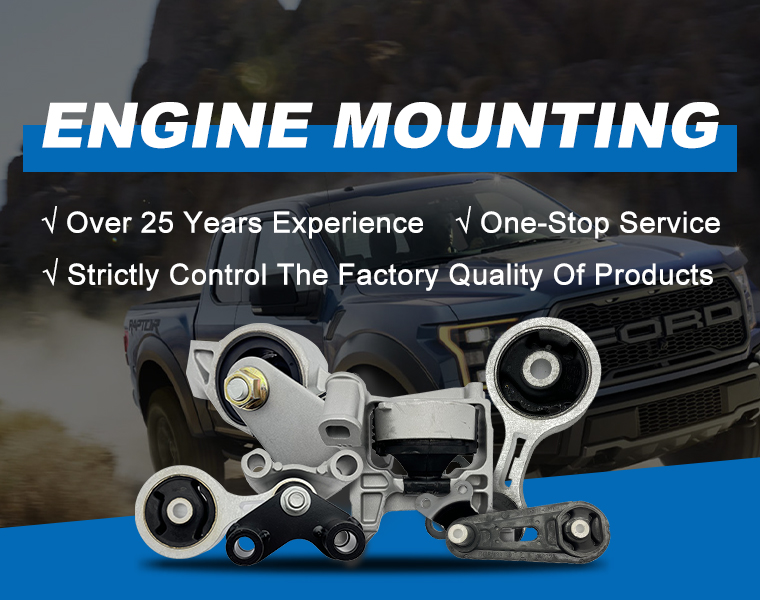
Pricing varies by region, shop, and vehicle, but the table below offers a general sense of what drivers commonly encounter.
Repair Type | Parts Cost (Estimated) | Labor Cost (Estimated) | Total Estimated Range |
|---|---|---|---|
Single mount, economy vehicle | $40–$120 | $80–$150 | $120–$270 |
Single mount, mid-size sedan or SUV | $70–$180 | $100–$200 | $170–$380 |
Single mount, luxury or European vehicle | $150–$400 | $150–$300 | $300–$700 |
Full set (2–4 mounts), standard vehicle | $150–$450 | $200–$450 | $350–$900 |
Bushing-only repair (where applicable) | $30–$90 | $60–$120 | $90–$210 |
These figures are general estimates and will vary depending on your specific vehicle, location, and chosen repair shop. Always request a written quote before authorizing work.
This is one of the most common questions mechanics hear, and the answer depends on the vehicle's age and mileage. If a car has over 80,000 miles and one mount has already failed, there's a strong chance the others are approaching the end of their service life too. In that situation, replacing all mounts together is often the more economical choice, since you avoid paying a second labor bill a few months later.
On newer vehicles with lower mileage, replacing only the failed mount is usually reasonable. A qualified technician can inspect the remaining mounts and tell you whether they show signs of wear or still have useful life left.
Engine mount replacement sits in a gray area of difficulty. Some mounts are straightforward to reach and can be swapped by a confident home mechanic with basic tools. Others require supporting the engine's weight safely while the mount is removed, which demands the right equipment and experience.
Attempting a DIY repair without the correct engine support can be dangerous and may damage surrounding components, turning a moderate repair into an expensive one. For mounts that require engine lifting or precise torque specifications, professional installation is almost always the safer and more cost-effective route, even accounting for labor charges.
If you're comparing quotes for a full mount replacement, it's worth asking your shop directly about the expected cost of motor mount replacement for your specific make and model, since estimates found online rarely account for regional labor rates or vehicle-specific complexity.
Not all replacement mounts are built the same. Cheaper, low-grade rubber compounds degrade faster under heat and stress, which means a bargain part today can mean another repair bill within a year or two. This is where sourcing from a manufacturer with strict quality control makes a measurable difference.
Kaiping Suhong Auto Parts Co., Ltd., known under its SUHON brand, has specialized in engine mounts and automotive rubber-metal components since 1995. The company is ISO9001 certified and builds its mounts using premium imported rubber, including Thailand RSS3 and Vietnam SVR3L compounds, engineered for resistance to temperature extremes, oil exposure, and aging. Every mount undergoes OE-standard laboratory testing before it leaves the factory, which is part of why SUHON products are trusted across Toyota, Honda, Nissan, Mazda, Ford, Subaru, Renault, BENZ, and BMW applications worldwide. For drivers and repair shops weighing parts quality against price, that kind of manufacturing consistency often pays for itself through fewer repeat repairs.
General price ranges are useful for budgeting, but the only way to know exactly what you'll pay is to get your specific vehicle inspected. A technician can confirm which mounts are failing, whether a bushing-only repair is possible, and whether replacing the full set makes sense given your car's age and mileage.
Before booking a repair, ask for a written estimate that breaks down parts and labor separately. This makes it easier to compare shops and spot any unusually high markups on parts. A little research upfront goes a long way toward making sure you pay a fair price for a repair that actually fixes the problem.


