


Views: 0 Author: Site Editor Publish Time: 2026-06-11 Origin: Site


TL;DR:
Engine mounts are rubber-and-metal components that secure the engine to the vehicle's frame and absorb vibration. When they fail, drivers experience excessive shaking, clunking noises, and poor handling. Replacing worn engine mounts restores stability, protects surrounding components, and prevents costly drivetrain damage.
A rough idle. A clunk under the hood when you shift into drive. Vibrations that seem to travel up through the floor. These are easy symptoms to dismiss—until the repair bill reminds you they weren't. Engine mounts are among the most overlooked components in routine vehicle maintenance, yet they play a critical role in keeping your engine stable, quiet, and correctly aligned.
This guide breaks down what are motor mounts, how to spot the warning signs of wear, and what the replacement process looks like from start to finish.


Motor mounts—also called engine mounts—are brackets made from metal and rubber that anchor the engine to the vehicle's chassis. Most vehicles have between two and four of them, positioned at different points around the engine block. Their job is twofold: hold the engine firmly in place, and absorb the vibration the engine produces during operation.
The rubber element is key. Metal alone would transmit every vibration directly into the cabin. The rubber acts as a buffer, dampening those vibrations so they never reach the driver. Over time, heat, oil exposure, and general wear cause that rubber to harden, crack, or collapse—and that's when problems start.
Modern vehicles may also use hydraulic mounts, which contain fluid chambers for even better vibration absorption. These offer superior performance but tend to cost more and can fail differently than standard rubber units.
Catching a worn mount early can save significant money. Once a mount deteriorates far enough, the engine begins to shift during acceleration and braking, putting stress on hoses, wiring, and the transmission itself.
Here are the most common warning signs:
Excessive vibration — A noticeable increase in cabin vibration, especially at idle, is often the first clue. The dampening effect of the rubber has been lost.
Clunking or banging noises — A failed mount allows the engine to move more than it should. That movement creates impact noises, particularly during gear changes or sudden acceleration.
Engine movement visible under the hood — With the hood open and the engine running, a compromised mount may allow visible rocking or shifting of the engine block.
Misaligned components — Hoses, belts, and wiring that appear stretched or offset can indicate the engine has shifted out of its correct position.
Increased vibration during acceleration — Mounts bear the most load under acceleration torque. A failing unit often makes itself known most clearly at this moment.
Understanding what are the symptoms of a bad motor mount is the first step toward protecting your vehicle from more serious—and expensive—damage.
Replacing engine mounts is not a simple bolt-on job. Because the engine must be partially supported during the process, most repairs require a floor jack or engine hoist to hold the block in position while the old mount is unbolted and the new one is installed.
The general steps a mechanic will follow:
Lift and secure the vehicle safely
Support the engine from below using a jack and wooden block
Remove the bolts securing the old mount to both the engine and the chassis
Extract the worn mount
Install the replacement unit and torque all fasteners to specification
Lower the engine onto the new mount and verify alignment
The difficulty varies by vehicle. Some mounts are accessible and straightforward; others are buried beneath ancillary components and require additional disassembly. Labor time is typically the largest cost variable.
Factor | Details |
Number of mounts (typical) | 2–4 per vehicle |
Common materials | Rubber, metal, hydraulic fluid |
Average lifespan | 60,000–100,000 miles |
Replacement labor time | 1–3 hours per mount |
Key failure causes | Heat, oil contamination, age, hard use |
Risk of delayed repair | Damage to hoses, belts, transmission |
When the time comes to have engine mounts replaced, using high-quality parts matched to your vehicle's OEM specifications makes a measurable difference in how long the repair lasts. Low-grade rubber compounds degrade faster, especially in high-heat engine bays, meaning a cheap repair can leave you back in the shop sooner than expected.

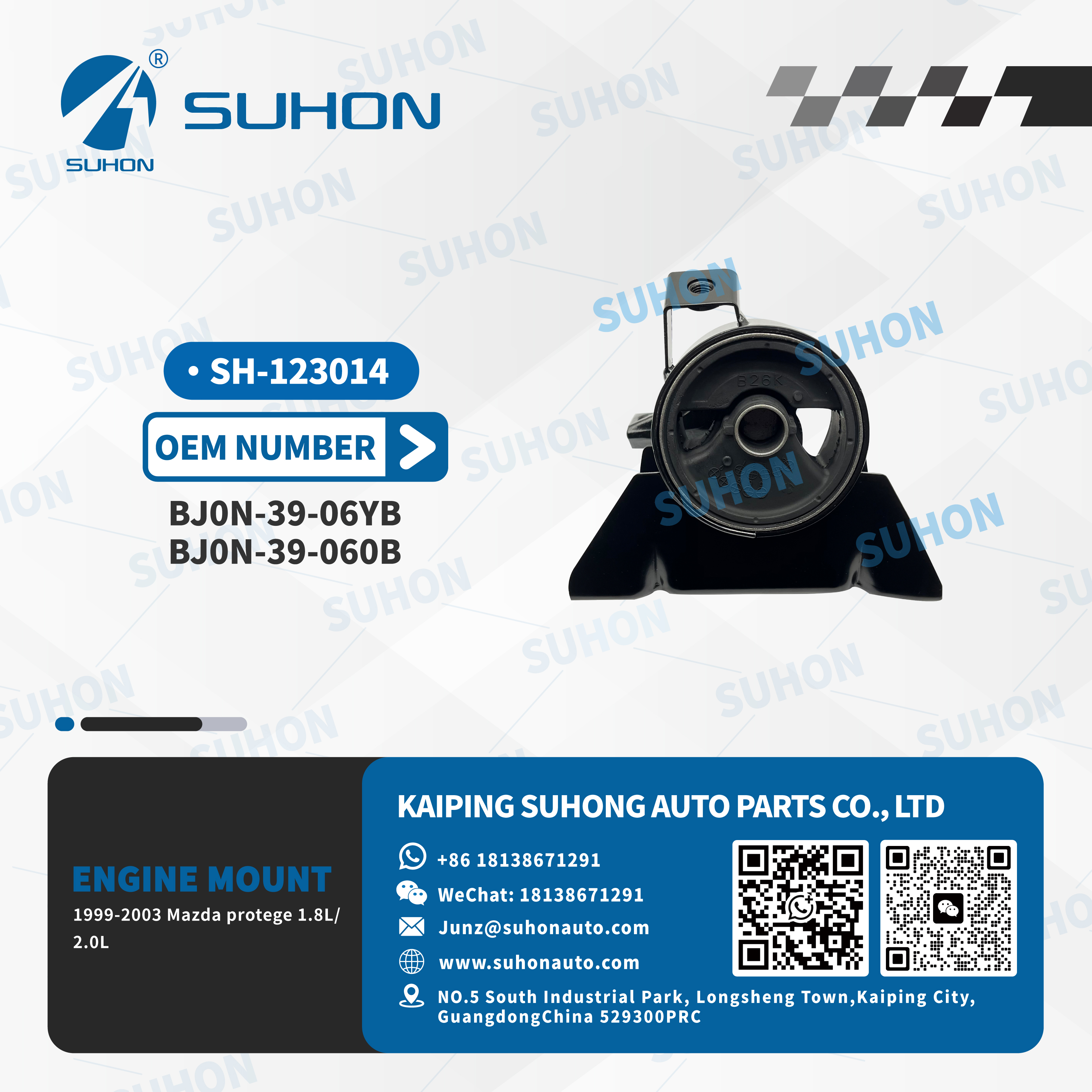
Not all engine mounts are created equal. The right choice depends on your vehicle, how you drive, and your priorities.
Standard rubber mounts — Best for everyday commuting. Affordable, widely available, and effective for normal driving conditions.
Hydraulic mounts — Offer superior vibration damping. A good choice for vehicles where cabin comfort is a priority, though they come at a higher price point.
Polyurethane mounts — Firmer than rubber, with less vibration absorption but greater engine stability. Common in performance or high-torque applications where precise engine positioning matters more than comfort.
Always verify part compatibility using your vehicle's make, model, year, and engine code. Using an incorrectly rated mount can cause premature failure or inadequate engine support.
There is no universal mileage interval for engine mount replacement the way there is for oil changes or spark plugs. Wear rate depends on driving style, road conditions, and vehicle type. That said, mounts on vehicles with high mileage, turbocharged engines, or a history of hard use should be inspected regularly.
If your vehicle is displaying any of the symptoms described above, schedule an inspection promptly. The longer a failed mount goes unaddressed, the greater the risk of cascading damage to other components.
Can I drive with a bad engine mount?
Short trips are possible, but driving with a failed engine mount is not recommended. The increased engine movement places stress on connected components—hoses, wiring, and the transmission—and can cause secondary damage that far exceeds the cost of the original repair.
How many engine mounts does a car have?
Most passenger vehicles have two to four engine mounts. Some also have a separate transmission mount. All should be inspected at the same time, since they age at similar rates.
How long do engine mounts last?
Engine mounts typically last between 60,000 and 100,000 miles, though this varies by vehicle type, mount material, and driving conditions. Vehicles subject to frequent towing, hard acceleration, or rough road surfaces tend to wear mounts faster.
Is it necessary to replace all mounts at once?
Not always, but it is often advisable. If one mount has failed, others of similar age are likely close behind. Replacing them together saves labor costs and reduces the chance of a repeat repair in the near future.
What happens if engine mounts are not replaced?
A deteriorating mount allows the engine to shift during operation. Over time, this movement can tear hoses, stretch or snap belts, damage wiring harnesses, and stress the transmission. What starts as a vibration problem can escalate into a major mechanical failure.


