
 English
Views: 0 Author: Site Editor Publish Time: 2026-05-26 Origin: Site
TL;DR:
Executing a successful motor mount replacement requires identifying severe cabin vibrations, supporting the engine securely with a hydraulic jack, and installing premium rubber or polyurethane components. Addressing these failing components early prevents major transmission misalignment, protects surrounding auto parts, and fully restores daily driving comfort.
Your vehicle relies on a precise balance of moving parts to keep you moving forward safely. Among the most critical, yet frequently overlooked, components are the rubber and metal supports that hold your engine firmly in place. These small but mighty parts absorb massive amounts of vibration and stress every single time you turn the ignition key.
When these structural components begin to wear down, the entire driving experience degrades. Drivers often report an immediate increase in cabin noise, sudden jolts during acceleration, or excessive shaking when idling at a traffic light. Ignoring these early warning signals can lead to catastrophic damage to the transmission and surrounding exhaust systems.
This comprehensive guide will walk you through the essential steps for diagnosing failure, selecting the right materials, and understanding the complete motor mount replacement process. By taking proactive measures, you can safeguard your vehicle's mechanical integrity, reduce long-term repair costs, and ensure a remarkably smooth ride for years to come.

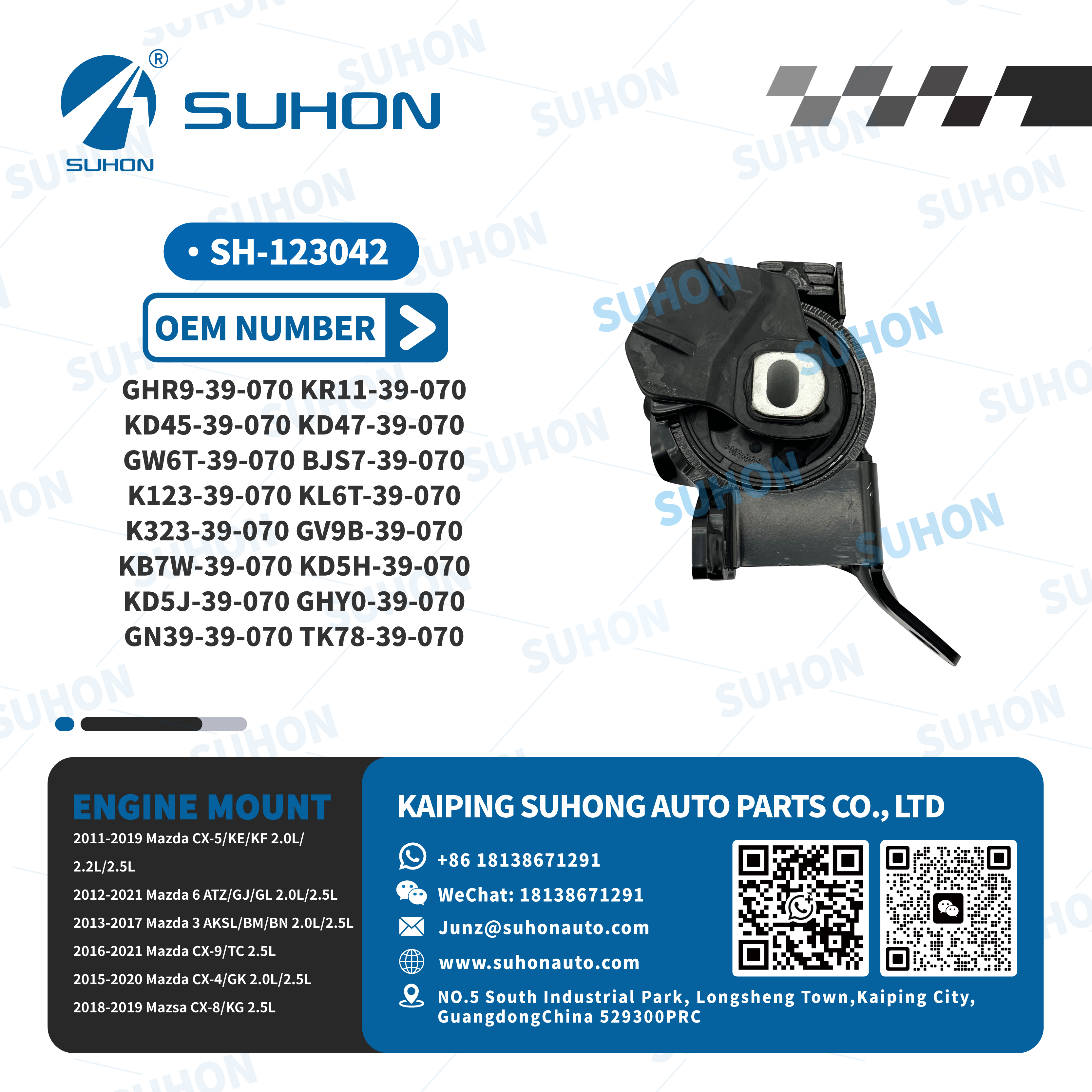
Identifying degradation early saves significant time and money. Because these vibration-dampening units degrade slowly over time, the symptoms can easily sneak up on you. According to automotive structural experts, standard rubber supports typically begin showing signs of fatigue around the 60,000-mile mark.
The most common indicator of failure is severe cabin vibration, particularly when the car is in gear but stopped. You might also hear a distinct clunking noise coming from the engine bay when shifting from reverse to drive. If you physically inspect the bay, visible cracks, tears, or leaking hydraulic fluid from the supporting units dictate an immediate need for service.
Below is a breakdown of common symptoms and their associated risk levels to help you prioritize your maintenance schedule:
Vehicle Symptom | Underlying Cause | Severity Level | Recommended Action |
Mild cabin vibration at idle | Normal rubber wear and aging | Low | Schedule an inspection within 3 months |
Distinct clunking when shifting | Severely torn rubber insulator | High | Stop driving aggressively; inspect immediately |
Visible engine movement | Broken metal bracket or completely sheared rubber | Critical | Tow vehicle to repair facility |
Leaking dark fluid near block | Ruptured hydraulic vibration dampener | Medium to High | Order replacement parts and schedule service |
Budgeting for this maintenance depends heavily on your vehicle's make, model, and the type of material you select. Front-wheel-drive vehicles often have more complex transverse layouts, making the labor slightly more intensive than traditional rear-wheel-drive configurations.
Parts alone generally range from $50 to $150 per unit, depending on whether you purchase standard aftermarket parts or premium OEM components. Labor costs will vary based on the accessibility of the hardware. To keep your vehicle running perfectly without breaking the bank, it is highly recommended to replace motor mounts in pairs or complete sets. Changing just one worn component transfers excessive stress to the remaining older units, accelerating their inevitable failure.
Choose premium rubber over basic aftermarket materials if daily driving comfort matters more than high-performance stiffness. Premium options from trusted manufacturers like KAIPING SUHONG AUTO PARTS CO. LTD. utilize high-grade Thailand RSS3 cigarette rubber, ensuring superior durability and optimal vibration absorption.


Material selection directly impacts both passenger comfort and mechanical longevity. Traditional natural rubber provides excellent isolation from harsh frequencies, making it the industry standard for passenger cars. Polyurethane alternatives offer extreme rigidity for sports cars but transfer significantly more vibration into the driver's seat.
For standard commuter vehicles, high-quality rubber remains the superior choice. An upgraded engine torque mount manufactured with advanced rubber formulations guarantees stability during rapid acceleration while preventing the block from twisting under heavy loads. Quality manufacturers implement strict ISO9001 certification standards and test their formulas in professional laboratories to withstand extreme temperatures and environmental contaminants.
Most factory-installed dampeners last between 60,000 and 100,000 miles. Driving habits, climate conditions, and frequent exposure to engine oil or power steering fluid can significantly shorten this lifespan.
While the vehicle may still operate, driving with a compromised dampener is highly discouraged. Doing so risks tearing vital radiator hoses, snapping exhaust manifolds, and causing severe alignment issues with the transmission.
Hydraulic dampeners contain a fluid-filled chamber that actively absorbs a wider range of frequencies. Choose hydraulic units if your luxury vehicle originally came equipped with them, as downgrading to solid rubber will noticeably decrease ride quality.
Addressing mechanical vibrations early is the smartest way to protect your automotive investment. By understanding the common failure points and selecting top-tier replacement hardware, you prevent minor annoyances from escalating into major structural repairs.
Take a moment to inspect your vehicle's engine bay this weekend. If you notice any deep cracks or experience jarring movements while shifting, do not delay your maintenance. Reach out to a trusted automotive parts manufacturer like SUHON to source reliable, laboratory-tested components for your specific vehicle application.


